
Table of Contents
- Why Made to Order Clothing Matters
- How Long Does Made to Order Take
- Made to Order vs Ready to Wear: The Real Differences
- Sustainable Fashion Benefits of Made to Order
- Quality and Durability You Can Feel
- Perfect Fit, Every Time
- Building a Wardrobe That Reflects Your Values
- Frequently Asked Questions
Last Updated: September 19, 2026
Why Made to Order Clothing Matters
Made to order clothing represents a fundamental shift in how we think about fashion consumption. Rather than buying mass-produced garments designed for an imaginary "average" body, you commission pieces tailored specifically to your measurements, preferences, and values. This approach addresses a genuine problem: most off-the-rack clothing doesn't fit well, arrives with environmental costs baked in, and often falls apart within a season or two.

The real tension here isn't between convenience and quality, it's between participating in a system designed to fail and investing in pieces built to last. Fast fashion thrives on the assumption that you'll buy again next month. Made to order works on the opposite principle: garments so well-fitted and durable that you'll wear them for years.
At Plym Club Clothing, we've built our entire model around this philosophy. Our made to order pieces use 100% organic cotton with water-based inks and biodegradable packaging, which means the environmental cost of your purchase is dramatically lower than conventional alternatives. You're not paying extra for sustainability as an afterthought, you're investing in pieces designed from the ground up to reflect your values.
This matters because the fashion industry generates enormous waste. Overproduction, poor fit, and planned obsolescence create a cycle that benefits retailers but costs the planet. Made to order clothing breaks that cycle by producing only what's actually ordered, ensuring each piece reaches someone who genuinely wants it.
How Long Does Made to Order Take
A fair question, because made to order timing is where theory meets reality. The timing for made to order pieces can vary. This isn't a limitation, it's a feature that separates genuine made to order from fast fashion masquerading as personalised.

The timeline works like this: your order enters production only after you've placed it. Fabric is sourced, cut to your specifications, sewn, quality-checked, and shipped. Each step takes time because rushing compromises either fit or durability. Our made to order hoodies and t-shirts, for instance, use heavier-knit organic ring spun cotton that requires careful handling throughout production.
For someone accustomed to next-day delivery, the wait might feel slow. However, when your garment arrives, it's designed to fit well and last, aligning with your specific order.
The wait also creates psychological distance from impulse purchasing. You're not buying because something caught your eye in a shop window. You're buying because you've thought it through, measured yourself, considered the design, and committed to wearing it. That intentionality shifts how you relate to your clothing.
Made to Order vs Ready to Wear: The Real Differences
The comparison between made to order vs ready to wear reveals why conventional retail has trained us to accept mediocrity. Ready-to-wear pieces are manufactured in standard sizes based on statistical averages. Factories produce thousands of identical garments and hope they sell. If they don't, they're discounted, donated, or destroyed. If they do sell and don't fit, that's your problem.
Made to order inverts this model. Production happens after purchase, which eliminates overstock entirely. You receive a garment made to your exact measurements, not a standardised size that approximates your body.
The fit difference is a key advantage. Ready-to-wear often assumes specific proportions, and if yours deviate, you might compromise on fit. Made to order aims to eliminate this compromise.
The durability difference is less visible but equally significant. Ready-to-wear manufacturers optimise for cost and speed. Seams are reinforced minimally, fabric weight is reduced to cut material costs, and finishing details are simplified. Made to order production often focuses on longevity. Construction details are typically considered to withstand repeated washing.
There's also the waste difference. Ready-to-wear production generates textile waste at every stage: cutting patterns leave scraps, unsold inventory ends up in landfill, and garments that don't fit get returned and discarded. Made to order eliminates unsold inventory entirely. Fabric is cut only for confirmed orders. Nothing goes to waste because nothing is produced speculatively.
| Aspect | Made to Order | Ready to Wear |
|---|---|---|
| Fit | Custom to your measurements | Standardised size approximation |
| Production timeline | 4-8 weeks after order | Manufactured in advance |
| Inventory waste | None, made only when ordered | Significant, overstock discounted or discarded |
| Durability | Built for longevity | Optimised for cost reduction |
| Environmental impact | Lower, no overproduction | Higher, waste at every stage |
| Price point | Premium | Competitive |
Sustainable Fashion Benefits of Made to Order
The environmental case for made to order clothing is straightforward: it eliminates the largest source of fashion waste, which is overproduction. Ready-to-wear retailers manufacture based on forecasts. Those forecasts are often wrong (From Source to Shelf: How AI Is Powering Sustainable Fashion). Unsold inventory represents pure waste, resources consumed, environmental damage done, for garments that never reach a customer.
Made to order produces only what's ordered. This single principle removes the primary driver of fashion waste. You can't have overstock if nothing is made until someone buys it.
The second environmental benefit is durability. A garment worn for five years has one-fifth the environmental impact per wear compared to one worn for one year. Made to order pieces, because they're fitted properly and manufactured to last, tend to be worn for significantly longer. Better fit means you actually enjoy wearing them. Better construction means they survive repeated washing without degrading.
The third benefit is material choice. Made to order models can support the use of premium materials like organic cotton. This approach can make sustainable materials more economically viable.
Plym Club ‘Made For The Future’ Hoodie →
Plym Club Clothing uses 100% organic cotton with OEKO-TEX Standard 100 certification, which verifies that the fabric is free from harmful substances. We also use water-based inks for our graphic designs, which eliminates the heavy metals and solvents found in conventional textile printing. Our packaging is biodegradable, so even the materials that arrive at your door break down naturally rather than persisting in landfill.
These choices are possible because we're not financing massive inventory. Every piece of fabric we source is destined for a specific customer. Every metre of organic cotton represents a confirmed order, not a speculative purchase.
Quality and Durability You Can Feel
The difference between quality and cheap becomes obvious the moment you touch the fabric. Made to order pieces, particularly those using heavier-knit organic cotton, have a substantial feel that signals durability. The fabric has weight. The seams are reinforced. The construction is meticulous because each garment is made for a specific person.
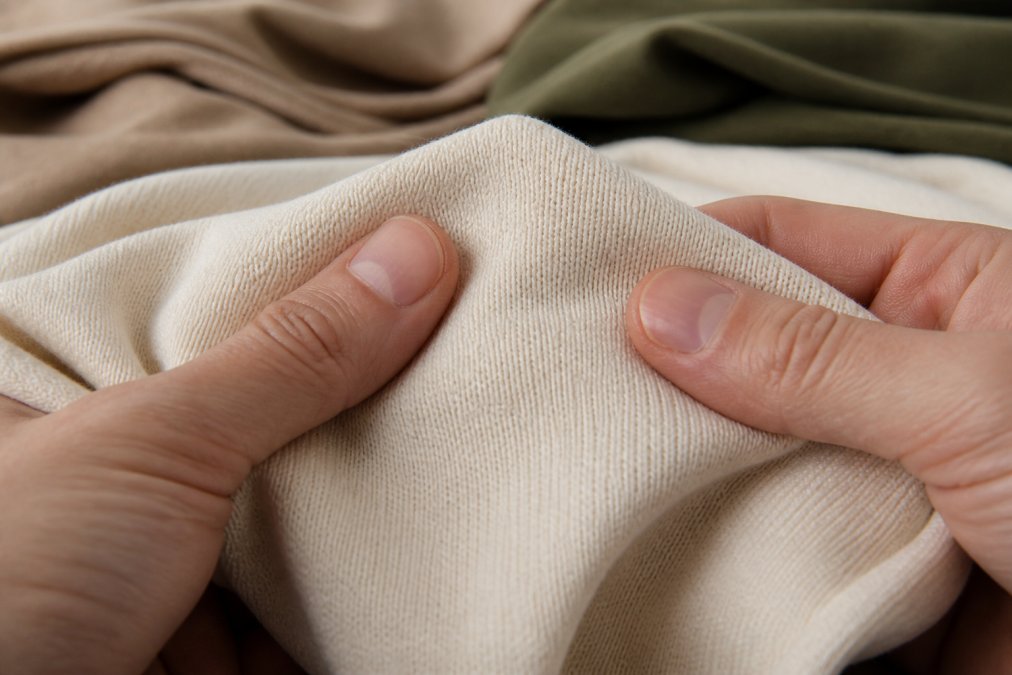
This matters because durability is the most underrated aspect of sustainable fashion. A cheap garment that falls apart after a few washes has an enormous environmental cost per wear. A quality garment that lasts for years has a tiny environmental cost per wear, even if the initial production used more resources.
Heavier-knit cotton, the type used in Plym Club Clothing's pieces, is designed for durability and to maintain its shape through repeated washing. This fabric is intended to improve with age, softening without thinning, and becoming more comfortable without losing integrity.
The construction details are important. Reinforced seams at stress points can help prevent the garment from unravelling. Properly finished necklines are designed to maintain their shape. Hems are stitched securely to support years of wear.
This is why made to order pieces cost more upfront. The labour is more intensive. The materials are better. The quality control is stricter. But the cost per wear, calculated over the actual lifespan of the garment, is often lower than fast fashion alternatives that need replacing every year or two.
Perfect Fit, Every Time
Fit is the primary reason people discard clothing. A garment that doesn't fit well gets worn rarely, if at all. It hangs in your wardrobe as a reminder of wasted money. Made to order clothing aims to address fit issues.
When you order made to order pieces, you provide your measurements. The garment is then produced based on those specifications.
This approach aims to address common fit problems, resulting in a garment that feels tailored to you.
This matters beyond comfort.
Building a Wardrobe That Reflects Your Values
Made to order clothing forces intentionality. You can't impulse-buy. You can't accumulate pieces mindlessly. You order what you actually want, wait for it, receive it, and wear it. This constraint is actually a feature.
Frequently Asked Questions
How do I know the organic cotton in made to order clothing is actually certified?
Look for third-party certifications like OEKO-TEX Standard 100, which verifies textiles are free from harmful substances. Plym Club Clothing holds this certification and is PETA Approved Vegan, meaning you can verify these claims independently. Certified organic cotton also follows strict standards for pesticide use and water management, so certification isn't just marketing, it's measurable accountability.
How long does made to order clothing actually take to arrive?
Delivery times vary by maker, but made to order typically involves a production period after your order is placed. This isn't a flaw, it's the point. The delay exists because garments are produced after you order, not sitting in warehouses. If you need something urgently, made to order isn't the right choice, but for planned purchases, the wait is worth the reduced waste and better quality.
What are the main sustainable fashion benefits of made to order?
Made to order eliminates overproduction and textile waste because items are made only when someone buys them. You also get garments designed to last longer, reducing the need for frequent replacements. Water-based inks and biodegradable packaging further reduce environmental impact. Together, these practices mean less landfill waste, lower water consumption, and a smaller carbon footprint per garment compared to fast fashion.
Is made to order clothing more expensive than ready to wear?
Yes, typically. Premium organic cotton, ethical production, and made-to-order manufacturing cost more than mass-produced fast fashion. However, the price reflects durability, garments last years, not seasons. When you calculate cost-per-wear over the garment's lifetime, made to order often costs less than buying cheap basics repeatedly. Plym Club's Made For The Future T-Shirt is £22 and Made For The Future Hoodie is £40, designed to outlast multiple cheaper alternatives.