
Table of Contents
- The Trade-Off: Environmental Impact vs Durability
- Benefits of Organic Cotton Clothing
- Signs of High-Quality Garment Construction
- Sustainable Apparel: What Actually Reduces Environmental Impact
- Durable Apparel with Premium Feel: The Longevity Factor
- How to Build a Sustainable Capsule Wardrobe
- Verifying Sustainability Claims and Avoiding Greenwashing
- Conclusion
- Frequently Asked Questions
Last Updated: September 25, 2026
The Trade-Off: Environmental Impact vs Durability
When you're choosing between sustainable durable apparel and conventionally made garments, you're really facing two competing values. One prioritises reducing environmental harm during production. The other prioritises garments that last for years without degrading. The tension here is real: the most environmentally friendly option isn't always the most durable, and the most durable garment isn't always the most sustainable.
This matters because most people assume these qualities go hand in hand. They don't. A fast-fashion t-shirt made from conventional cotton might be durable in theory, but it's designed to be replaced. An organic cotton piece might reduce water consumption during farming, but if the construction is poor, it falls apart in months. Understanding this trade-off is essential before you commit to either approach.
At Plym Club Clothing, we've built our approach around the idea that you shouldn't have to choose. But the reality for many shoppers is exactly that, and knowing where each priority wins helps you make the right call for your wardrobe.

Benefits of Organic Cotton Clothing
Organic cotton is grown without synthetic pesticides or fertilisers, which means lower chemical runoff into soil and water systems. This matters at scale: conventional cotton farming uses significant volumes of water and relies on pesticides that persist in ecosystems. Switching to organic reduces those inputs substantially.
The second benefit is soil health. Organic farming practices build soil structure rather than depleting it, which means the land remains productive for future crops. This has long-term implications for farming communities and regional water security.
What's often overlooked is that organic cotton isn't inherently more durable than conventional cotton. The durability depends entirely on how the fibre is processed and how the garment is constructed. Organic cotton can be spun into thin, fragile fabric or thick, strong fabric. The sustainability benefit comes from the farming method, not automatically from longevity.
Many people find that organic cotton garments feel softer against the skin, partly because organic processing avoids certain chemical treatments that conventional cotton undergoes. Whether that translates to durability depends on the weight and construction of the final piece.
Signs of High-Quality Garment Construction
High-quality construction is visible and tangible. The first thing to check is seam strength. Run your finger along the seams, they should be straight, evenly spaced, and reinforced. Seams that are wavy, loose, or single-stitched will fail quickly, regardless of the fabric quality.
Weight matters more than most people realise. Pick up the garment and feel its density. A quality t-shirt or hoodie should have substantial weight to it, not feel papery or thin. Heavier knit fabric resists pilling, holds its shape better, and withstands repeated washing without thinning out. This is one of the most reliable indicators of longevity.
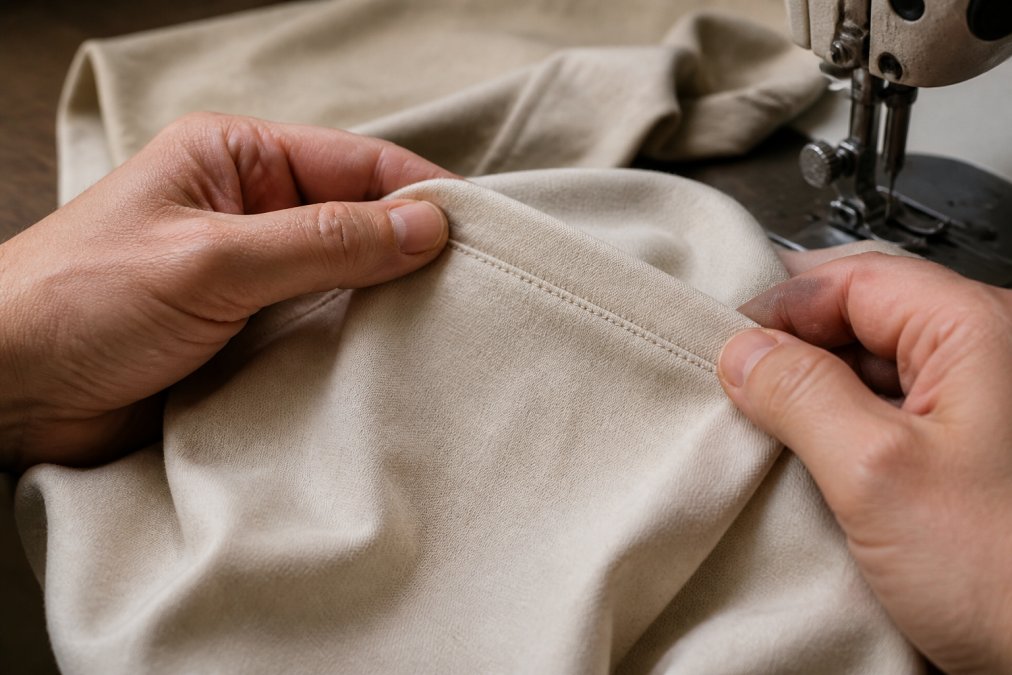
Check the neckline and cuff finishing. Look for reinforced hems and binding that's sewn securely. Cheap garments often have loose, flimsy necklines that stretch out after a few washes. Quality pieces have multiple rows of stitching and proper binding that holds its shape.
Fabric composition matters too. Pure organic cotton is stronger than cotton blends, especially when it's ring-spun cotton, which uses a traditional spinning method that creates stronger, more durable yarn. Water-based dyes, rather than chemical dyes, often indicate a brand that's invested in both sustainability and quality, because those dyes require better fabric preparation to adhere properly.
Sustainable Apparel: What Actually Reduces Environmental Impact
True environmental reduction comes from three areas: farming practices, manufacturing processes, and packaging. Organic cotton addresses the farming side. But manufacturing impact is equally significant, water used in dyeing, chemicals in finishing, energy in production, and transportation all add up.
Many brands claim sustainability without addressing all three. A garment made from organic cotton but dyed with conventional chemical dyes and shipped globally still carries substantial environmental cost. The most credible sustainable brands measure and disclose their full footprint.
Made-to-order production reduces environmental impact in a concrete way: it eliminates overproduction and unsold inventory. When you order only what you need, there's no excess stock sitting in warehouses or ending up in landfills. This is why some brands, including Plym Club Clothing, use made-to-order models, it's one of the most direct ways to reduce waste.

Packaging matters more than many shoppers realise. Biodegradable or compostable packaging breaks down naturally rather than persisting in landfills for decades. Water-based inks used in printing mean fewer toxic chemicals in the production process and fewer pollutants released into water systems.
Plym Club Staple Hoodie - Black →
The real test of sustainability is transparency. A brand that publishes its certifications, discloses its supply chain, and measures its environmental impact is more trustworthy than one that uses vague "eco-friendly" language without evidence. Look for third-party certifications like OEKO-TEX Standard 100, which verifies that textiles meet strict safety and environmental standards.
Durable Apparel with Premium Feel: The Longevity Factor
Durability is measured in wear cycles, how many times you can wash and wear a garment before it degrades noticeably. A truly durable piece lasts 3-5 years of regular wear, sometimes longer. This reduces the number of replacements you need, which is its own form of environmental benefit.
Premium feel comes from several factors working together. Fabric weight is the foundation, heavier knit feels substantial and expensive. But finishing matters too. Quality garments have smooth, even dyeing with no colour bleeding. The fabric should feel soft without being flimsy, and maintain that softness after multiple washes.
Construction quality directly impacts longevity. Double-stitched seams, reinforced stress points, and proper hem finishing mean the garment holds together through years of wear. A hoodie with reinforced hood attachment and strong cuff binding will outlast one with basic single stitching by years.
The trade-off here is real: maximum durability sometimes requires synthetic fibres or blends that are more environmentally problematic to produce. Pure organic cotton can be durable, but it requires careful construction and proper weight. A lighter organic cotton garment might be more sustainable in production but less durable overall, meaning you replace it more often.
The best approach is finding the balance point: organic cotton that's heavy enough and well-constructed enough to last years, reducing the total environmental impact over the garment's lifetime. This is where sustainable durable apparel makes sense, it addresses both concerns simultaneously.
How to Build a Sustainable Capsule Wardrobe
A capsule wardrobe is a small collection of versatile, high-quality pieces that work together. The sustainability benefit is obvious: fewer total garments means less overall environmental impact. The premium feel benefit is equally clear: a smaller wardrobe of quality pieces looks and feels better than a larger wardrobe of cheap basics.
Start with neutral staples that work across seasons and occasions.
| Capsule Wardrobe Element | Purpose | Quality Indicator | Expected Lifespan |
|---|---|---|---|
| Basic T-Shirt (2-3 colours) | Foundation layer, versatile | Heavy knit, reinforced seams | 3-5 years |
| Quality Hoodie (1-2 colours) | Layering, casual wear | Durable cotton, strong cuffs | 4-6 years |
| Neutral Trousers (1-2 pairs) | Professional, casual mix | Proper weight, secure hems | 3-5 years |
| Layering Pieces (1-2 items) | Seasonal flexibility | Breathable, well-constructed | 2-4 years |
Verifying Sustainability Claims and Avoiding Greenwashing
Greenwashing is rampant in fashion. Brands use vague terms like "eco-friendly," "natural," and "sustainable" without backing them up with evidence. Learning to spot the difference between real commitment and marketing is essential.
Conclusion
The choice between reduced environmental impact and durability isn't actually binary. The best sustainable durable apparel addresses both, organic cotton that's heavy enough and well-constructed enough to last years. This reduces environmental impact in production and over the garment's lifetime through longevity.
Frequently Asked Questions
Does durable clothing always have a lower environmental impact?
Not automatically. A garment made from synthetic fibres might last longer but shed microplastics throughout its life. Sustainable apparel focuses on reducing impact during production and disposal, while durability extends how long you wear it. The best choice combines both: organic cotton that's well-constructed and built to last. A durable synthetic piece worn for five years may have lower overall impact than a poorly-made organic cotton item replaced annually, but sustainable durable apparel offers the best of both worlds.
How can I verify the environmental claims of a clothing brand?
Look for third-party certifications like OEKO-TEX Standard 100 (which verifies textiles are tested for harmful substances) or PETA approval for vegan production. Ask brands for specifics: Where is cotton grown? Who certifies it as organic? What dyes and inks do they use? Brands using water-based inks and biodegradable packaging should provide documentation. Greenwashing relies on vague language; legitimate sustainable apparel brands share transparent production details and certifications you can verify independently.
What makes a clothing staple feel premium?
Premium feel comes from heavier-knit fabrics, higher thread counts, and superior construction. Organic ring-spun cotton creates a softer, more durable fabric than standard cotton. Reinforced seams, quality stitching, and careful finishing details signal craftsmanship. Made-to-order production often means better quality control since pieces aren't mass-produced. The weight of the fabric in your hands, how it drapes, and how it feels against skin all contribute. Premium staples also maintain their appearance after washing because they're constructed to withstand repeated wear.
Is organic cotton more durable than synthetic blends?
Organic cotton can be extremely durable when it's high-quality and well-constructed, especially if it's ring-spun and heavier-knit. Synthetic blends often prioritise cost reduction over longevity. However, durability depends more on construction quality than material alone. A poorly-made organic cotton garment won't outlast a well-made synthetic one. The advantage of organic cotton is that it biodegrades at end-of-life rather than shedding microplastics, making it the more sustainable choice when both are equally well-constructed.
How does made-to-order reduce clothing waste?
Made-to-order production only manufactures items when customers order them, eliminating unsold inventory that typically ends up in landfill. This model also allows for customisation, reducing returns from poor fit or design mismatches. Brands using made-to-order typically invest in better quality since they're not racing to produce volume, and they can use sustainable packaging without worrying about storage. The result is less overproduction, fewer returns, and less waste throughout the supply chain, though delivery times may be longer than fast-fashion alternatives.