
Table of Contents
- What Makes Heavy Knit Cotton Different
- GSM in Cotton Clothing Explained
- Density and Durability: The Core Connection
- Benefits of Heavyweight Organic Cotton
- How to Care for Heavy Knit Cotton
- Verifying Quality: Certifications and Standards
- Frequently Asked Questions
Last Updated: September 28, 2026
What Makes Heavy Knit Cotton Different
Heavy knit cotton stands apart from standard cotton garments because of its construction method and fibre density. The difference isn't just about weight, it's about how the fabric is engineered to resist wear, maintain shape, and improve with age rather than deteriorate.
When cotton is knitted at a heavier weight, the loops that form the fabric are tighter and more densely packed. This creates a barrier against pilling, stretching, and the general breakdown that lightweight cotton experiences after repeated washing and wearing. A standard t-shirt might feel soft initially, but the loose weave means fibres separate and break down quickly. Heavy knit cotton resists this degradation because each stitch is supported by the density around it.
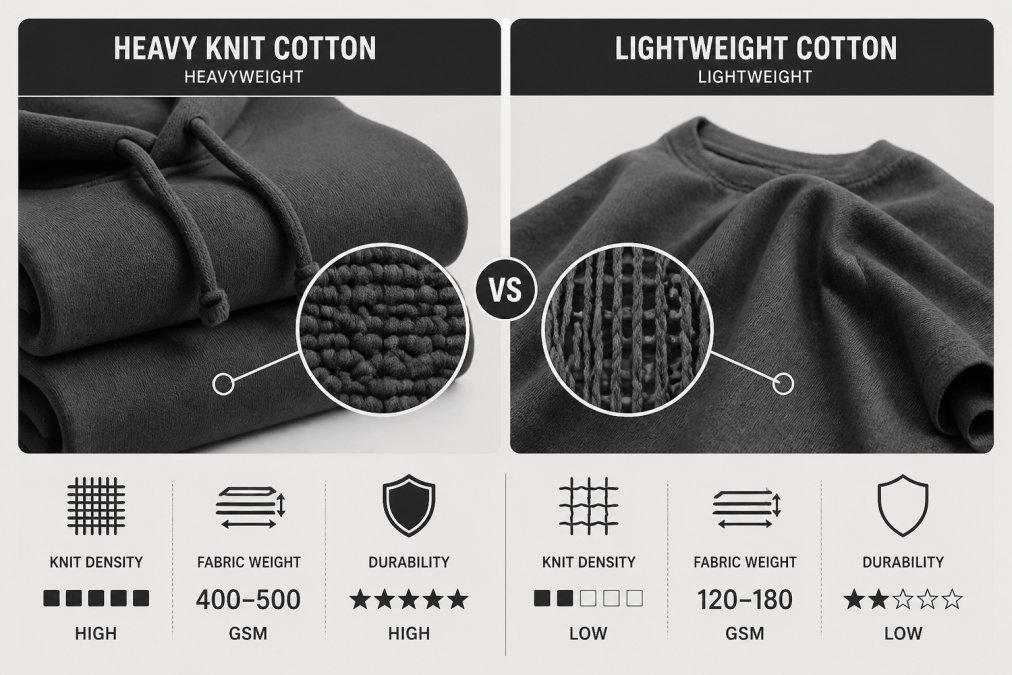
The durability advantage becomes obvious after ten washes. Lightweight cotton often shows fading, shape loss, and surface pilling. Heavy knit cotton maintains its colour, holds its form at the shoulders and hem, and develops a softer hand feel without falling apart. This is why Plym Club Clothing uses heavier dense knit organic ring spun cotton, the density ensures garments last years, not months.

GSM in Cotton Clothing Explained
GSM stands for grams per square metre, a measurement that quantifies how much fabric weighs across a standardised area. It's the most reliable indicator of cotton density and directly correlates with durability.
A lightweight t-shirt typically measures 150-180 GSM. These garments feel insubstantial and break down quickly because there simply isn't enough fibre per unit area to withstand repeated stress. Standard mid-weight cotton sits around 180-220 GSM, acceptable for casual wear but still prone to stretching and pilling over time.
Heavy knit cotton starts at 220 GSM and climbs toward 300+ GSM for premium hoodies and sweatshirts. At this density, the fabric has enough structural integrity to resist deformation. When you wash it, the weight holds the garment's shape. When you wear it, the density prevents individual fibres from breaking free and creating pills on the surface.
The relationship between GSM and longevity is straightforward: higher GSM means more fibre, which means more durability. A 250 GSM hoodie will outlast a 180 GSM one by years, assuming both are made from quality cotton. This metric cuts through marketing claims because it's objective and measurable.
Density and Durability: The Core Connection
Fabric density determines how a garment responds to the stresses of daily life. Washing, wearing, friction against skin and other fabrics, and UV exposure all attack cotton at the fibre level. Density is the garment's defence.
In a densely knitted fabric, each loop of yarn is surrounded by other loops, creating mutual support. When one fibre experiences stress, the surrounding fibres share the load. In loose weaves, isolated fibres take the full force of that stress alone, which causes them to snap or separate. This is why heavy knit cotton survives hundreds of washes while lightweight cotton begins deteriorating after twenty.
Pilling, those annoying fabric balls that form on the surface, happens when loose fibres break free and tangle together. Dense knits prevent pilling because the fibres are locked in place and can't escape. Even if a fibre does break, it's held by the surrounding structure and can't migrate to the surface. This is why premium hoodies maintain their appearance for years whilst cheap alternatives look shabby after a season.
Shrinkage is another durability factor linked to density. Lightweight cotton shrinks unpredictably because the loose weave allows water to penetrate and move freely, causing uneven contraction. Heavy knit cotton shrinks minimally because the tight weave resists water penetration. The garment maintains its fit wash after wash.
Benefits of Heavyweight Organic Cotton
Combining heavyweight construction with organic cotton creates garments that perform better, last longer, and align with values around sustainability. Organic cotton is grown without synthetic pesticides or fertilisers, which means the fibres start cleaner and remain more resilient throughout their lifecycle.
Organic cotton fibres are typically stronger than conventional cotton because they're not exposed to chemical treatments that can weaken the plant. When these stronger fibres are knitted at heavy weight, the result is a garment that resists wear exceptionally well. The density locks in the strength, creating a compounding durability advantage.
The environmental benefit is significant. A heavyweight organic cotton garment worn for five years has a far lower environmental cost per wear than a lightweight synthetic alternative worn for one season. Made-to-order production, like Plym Club Clothing's approach, eliminates waste from overproduction and unsold inventory. Combined with eco-friendly biodegradable packaging and water-based inks, the full lifecycle impact shrinks substantially.
Heavyweight organic cotton also feels different. The fabric develops character over time, softening slightly with wear whilst maintaining structural integrity. The hand feel improves rather than degrades, which is why people develop attachments to these garments. They become favourites, not disposables.
How to Care for Heavy Knit Cotton
Proper care extends the lifespan of heavy knit cotton significantly. The fabric's density means it can withstand more aggressive treatment than lightweight alternatives, but intentional care still matters.
Plym Club Staple Hoodie - Black →
Wash in cool water (30°C or below) to minimise dye fading and reduce the thermal stress on fibres. Hot water accelerates fibre breakdown and causes unnecessary shrinkage. Heavy knit cotton doesn't require hot water to get clean, the density means dirt doesn't penetrate deeply, so cool water suffices.
Wash inside out to protect the outer surface from friction against other garments and the washing machine drum. This simple step prevents premature pilling and fading. Use a gentle cycle rather than heavy agitation; even dense fabric benefits from reduced mechanical stress.
Avoid fabric softener. It leaves a coating that reduces absorbency and can trap moisture, leading to odour and mildew. Heavy knit cotton is naturally soft and becomes softer with washing, no chemical enhancement needed.
Dry flat or hang dry rather than tumble drying. The heat in a dryer causes unnecessary fibre stress and can set stains permanently. Air drying preserves the garment's shape and colour. If you must use a dryer, use the lowest heat setting and remove the garment whilst still slightly damp.
Store folded rather than on hangers. Heavy knit cotton can stretch under its own weight if hung for extended periods. Folding maintains the garment's shape and prevents shoulder deformation.
Verifying Quality: Certifications and Standards
Marketing claims about organic cotton and sustainability mean nothing without third-party verification. The fashion industry is rife with greenwashing, brands making environmental claims they can't substantiate.
OEKO-TEX Standard 100 is a rigorous testing protocol that verifies textiles are free from harmful substances. Garments carrying this certification have been tested for over 100 different chemicals and heavy metals. It's a meaningful guarantee that the cotton is genuinely clean and safe.
PETA Approval indicates that a brand meets strict animal welfare standards. For clothing, this typically means no animal-derived materials and ethical labour practices. It's a secondary verification that the brand takes ethics seriously beyond just the fibre itself.
Check whether the brand publishes information about its supply chain. Transparent businesses are willing to disclose where cotton is grown, who processes it, and how garments are made. If a brand is vague about sourcing or refuses to answer questions, that's a red flag.
Look for certifications from established bodies rather than self-created claims. Phrases like "eco-friendly" or "sustainable" mean nothing without a certifying organisation behind them. Plym Club Clothing's OEKO-TEX Standard 100 and PETA Approval are verifiable through the certifying organisations themselves, not just the brand's word.
OEKO-TEX Standard 100 certification requirements provides transparent criteria for what the certification actually means. PETA's vegan fashion standards details the animal welfare requirements. These are the sources of truth, not the brand's marketing copy.
Heavy knit cotton lasts longer because of density, more fibres per unit area means more resilience against wear, washing, and time. When you combine that density with organic cotton and transparent certifications, you're investing in garments that genuinely perform and improve with age. Plym Club Clothing's heavyweight organic cotton hoodies and t-shirts, crafted from certified organic fibres with water-based inks and biodegradable packaging, exemplify this approach. The made-to-order model means you get exactly what you need without waste. Research on textile durability and longevity confirms that heavier, denser fabrics significantly extend garment lifespan. Shop now and experience the difference quality construction makes.
Frequently Asked Questions
What makes heavy knit cotton more durable than lightweight fabrics?
Heavy knit cotton contains more fibres per square centimetre due to its higher GSM (grams per square metre). This density creates stronger interlocking between threads, resisting pilling, tearing, and wear from repeated washing and wearing. The thicker construction also means individual fibres experience less stress during movement, extending the garment's lifespan significantly compared to lightweight alternatives.
How does GSM in cotton clothing affect longevity?
GSM measures fabric weight and directly influences durability. Heavier garments (typically 200+ GSM) withstand more washing cycles, friction, and everyday wear without degrading. Higher GSM fabrics maintain their shape better, resist shrinkage more effectively, and show less pilling over time. Plym Club's heavyweight organic cotton hoodies use premium GSM construction to ensure they remain wearable for years rather than months.
Is 100% organic cotton more durable than cotton blends?
Pure organic cotton can be exceptionally durable when properly constructed with high GSM and quality knitting techniques. Blends sometimes sacrifice longevity for cost savings. However, durability depends more on GSM, knit density, and fibre quality than composition alone. Organic cotton allows for premium construction without synthetic degradation, making it ideal for garments designed to last. Look for certifications like OEKO-TEX Standard 100 to verify quality.
Does heavy knit cotton dense its shape after washing?
Quality heavyweight cotton resists shape loss when cared for properly. The dense knit structure provides inherent shape retention, though improper drying (high heat, hanging while wet) can cause stretching. Lay flat to dry and avoid high-temperature washing to preserve the garment's fit. Organic cotton treated with water-based inks maintains structural integrity better than chemically treated fabrics, making premium hoodies like Plym Club's more shape-stable over time.